February 2026
To Ban or Not to Ban: Kids’ Safety on Social Media
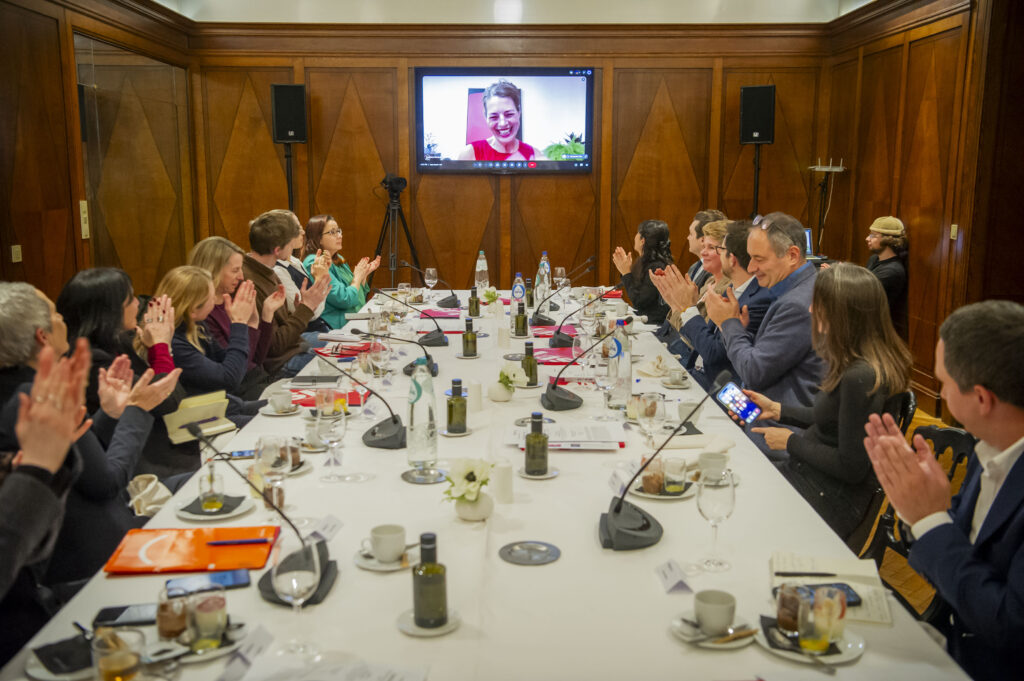
After Australia banned social media for users under 16 in December 2025, European countries, including France, Greece and Spain, are also weighing social media bans for teenagers. With European Commission President Ursula von der Leyen calling for “parents, not algorithms” to raise Europe’s children, the political momentum for access restriction is clearly growing. Yet, is age-restricted access to social media the best solution to address the complexities of today’s parenting and teenagers’ mental health? Does Europe have enough evidence on its impact and enforceability? And should it introduce a harmonised digital majority age?
As the European Union launches a presidential expert panel to define a new approach to youngsters’ online safety and some member states move towards national bans, the Lisbon Council convened the High-Level Working Lunch on ‘To Ban or Not To Ban: What Scientific Evidence and Practice Teach Us on Kids and Social Media,’ providing a platform for international experts, policymakers and children’s online safety advocates to come together and unpack the complex reality behind the headlines.
Joining from Australia, Professor Amanda Third, co-director of the Young and Resilient Research Centre at Western Sydney University, faculty associate at the Berkman Klein Center for Internet and Society at Harvard University and member of the advisory board to the implementation of the social media ban, opened the discussion by providing very first insights into the Australian case and discussing viable alternative solutions to a blanket ban. One key concern: if platforms are legally absolved of responsibility for hosting children, they may scale back “safety-by-design” efforts, potentially resulting in a less regulated digital environment for minors who circumvent age-verification systems or seek out less safe, decentralised alternatives. The conversation also pointed to how total isolation can be as harmful as excessive use and highlighted a privacy paradox where compulsory age checks, including behavioural profiling, are introduced for all users. Instead, a holistic approach was favoured to move beyond blunt access bans, including targeting harmful features and other measures that provide children with a safer online experience. Leslie Miller, vice president of public policy at YouTube, presented what YouTube is doing and highlighted the importance of having conversations outside Silicon Valley to reflect on European reality and legislation in place.
High-level speakers included Leanda Barrington-Leach, executive director, 5Rights Foundation; Francesca Centola, policy and advocacy advisor, Save the Children; Jutta Croll, chairwoman and board member, Digital Opportunities Foundation (Germany), and member, safety advisory board, Snap Inc.; Simeon de Brouwer, digital policy assistant, European Digital Rights (EDRi); Elina Eickstadt, hacker and spokesperson, Chaos Computer Club and V. (CCC); Elizabeth Gosme, director, COFACE Families Europe; Martin Harris Hess, head of sector for protection of minors, directorate-general for communications networks, content and technology, European Commission; Francesca Pisanu, European Union advocacy officer, eurochild; Maria Soledad Pera, associate professor in the web information system group, Delft University of Technology (TU Delft); and Andrea Tognoni, case handler, directorate-general for communications networks, content and technology, European Commission.